Perennial edibles: Plant once, eat for years to come

There is plenty you can grow to have a healthy snack.
Online chatter has been encouraging gardeners to plant and grow perennial edibles, but many gardeners already do grow them, even if they don’t necessarily use them as food.
Perennial edibles are plants that come back year-after-year hat we can eat. One of the most common is rhubarb. Its large leaves and durability make it an attractive perennial plant. If you harvest stalks regularly and remove the flower spike, you can harvest well into summer. Remember, it is the stalk that is edible and not the leaf. There are many uses for the stalks and if you don’t have time to process as you harvest, it freezes well.
Horseradish is another commonly grown edible perennial plant. The root e edible, but did you know that the leaves can be eaten too? While it prefers a full sun location, if it is grown in a more contained spot with less sun, it is more manageable. Given ideal growing conditions, it will spread prolifically and, with its root system, it is very difficult to remove. Processing horseradish root can be challenging as fumes from the spicy flesh, like that of onions, can sting the eyes and irritate the skin. Trying to can it makes one long for a return to outdoor summer kitchens.
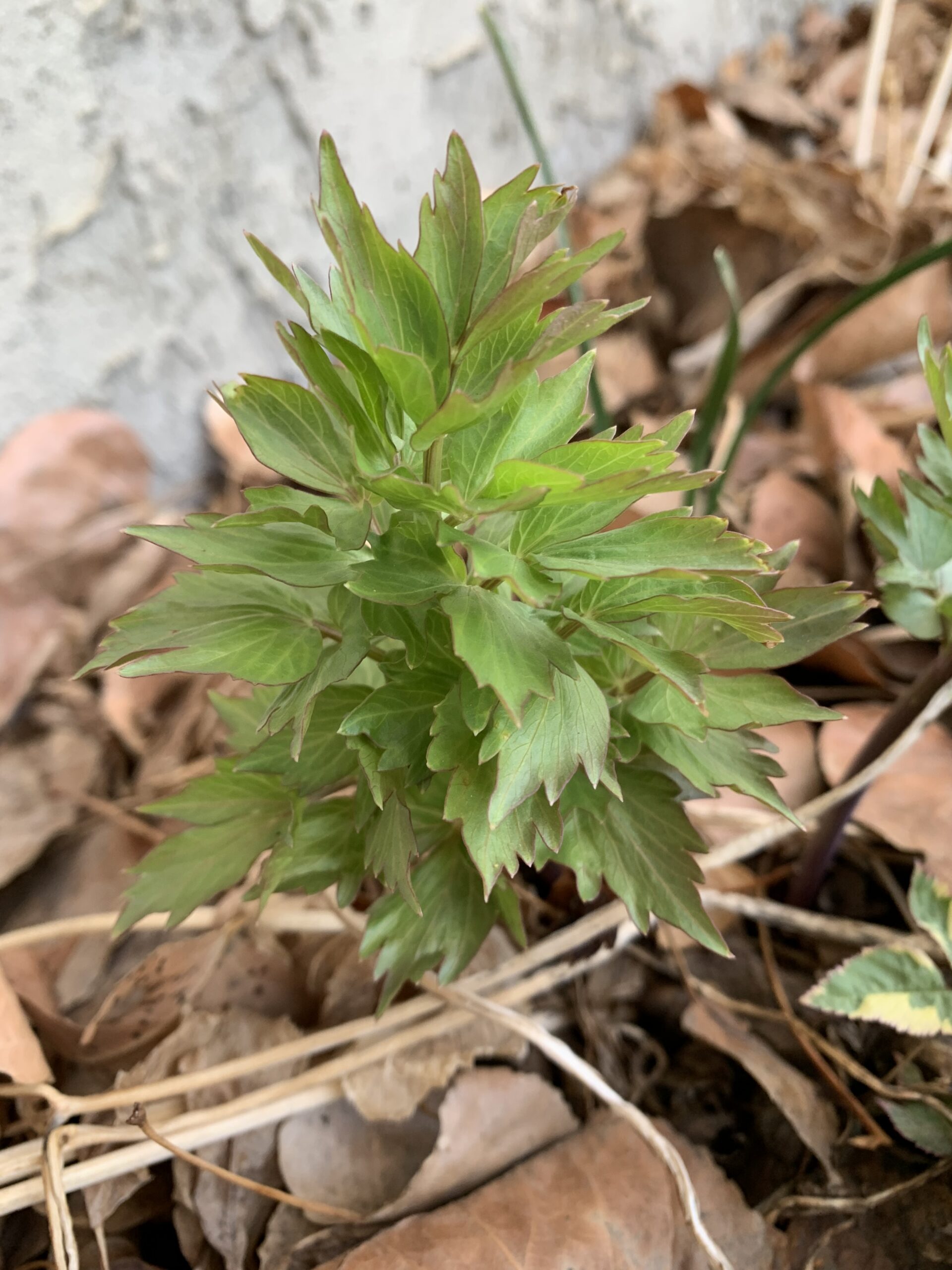
Lovage, like horseradish, needs to be planted with care to manage its spread, but it is hardy. In my yard, it is grown under the canopy of poplar trees on the east side of my house, so it only reaches about 60 cm in height. My neighbour grows it beside her north-facing fence in the back lane and, with no extra care, it grows 1 m tall. I have seen it 2 m tall in a full sun garden with irrigation.
Walking onions are extremely hardy and can easily survive a Calgary winter. They produce some of the earliest edible greens in the garden. Unlike onions available at the grocery store, they do not produce an edible bulb at their base. As they mature, the large hollow stems can be stuffed to impart onion flavour to the filling. The bulbs that form at the tips of the stems are also edible.
Chives, another member of the onion family, grow well here. The flowers, as well as the greens, can be eaten. Add the flowers to a salad for a splash of colour and onion flavour. Harvesting and using the flowers prevents seed formation, thus limiting self-sowing.
Asparagus, while requiring three years of establishment before the first harvest, makes a beautiful addition to the garden. It grows tall with plumes of airy, delicately leafed stems. Fresh asparagus from your own garden is a delicious treat.
Strawberries are another commonly grown perennial edible. With a bit of plant management, you can have a delicious crop year-after-year. Everbearing varieties produce fruit all season. Wild and alpine strawberries can be used as groundcovers and will tolerate some shade. Balcony growers can get strawberries in hanging baskets, but they won’t survive a Calgary there.
Raspberries also come back year-after-year. To have a good fruit crop and nice plant patch, read and follow the pruning directions for the cultivar you select. There is even a thornless variety available.
Other perennial edibles include herbs such as oregano, thyme, and mint. Some varieties are hardier than others, so review the plant tag when making your selection. Mint will need to be contained, and its flower head managed, or it will spread throughout the garden.
Then there are the fruiting shrubs and trees; currents, haspkaps, saskatoons, crabapples, apples, pears, and sour cherries to name a few.
While it may take some research to find ways to cook some of these foods so that you enjoy them, they still make lovely additions to the garden. When considering adding a perennial to your garden, why not try an edible?
For more information about gardening in Calgary, visit our website calhort.org.


