


.png?width=1080&height=1080&name=Favicon%20(1).png)

There are places in the world we have dreamed of visiting. However, as we get on in years, travelling to those places far away may no longer be possible. We can watch Rick Steeves’ travel programs on PBS and dream. Or, we can re-visit places we have seen in our younger days.
On holiday in 1965, my husband and I travelled by Lambretta scooter from England through Belgium, Luxembourg, Germany, Austria, Yugoslavia, and Italy, then returning by train (scooter on board) from Milan, through Switzerland and France. We camped all the way. This was rougher than the conducted tour with luxury hotels, but was the best way to see places, really drinking in the foreign atmosphere.
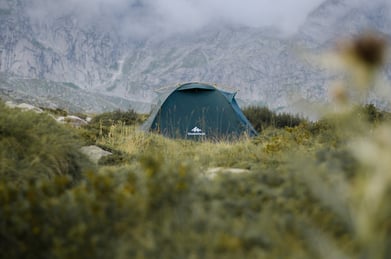 Preparations were simple – no hotel bookings – only a list of camping sites for each country as reservations were not necessary at that time. We also had to apply for passports, visas, travellers’ cheques (do these still exist?), and Channel ferry bookings. We also obtained the Automobile Association route maps, which proved to be invaluable. No Google maps! We kept luggage to a minimum as there was not much room on the scooter. Crease-resistant clothes which dried quickly were the best bet. Our small tent was just big enough for sleep; you couldn’t stand up inside it.
We left Dover by ferry and disembarked in Ostend, Belgium, and in the following weeks visited many towns; Brussels, Stuttgart, Munich, Salzburg, Vienna, Rijeka, Split, Venice and Trieste. We then travelled by train from Milan, as we were short of time on our three week vacation. Our journey from there to Calais was swift and did not give us much opportunity for sightseeing, other than through the train windows.
In Yugoslavia we travelled by road as far as the town of Split then began our journey up the coast by steamer to Rijeka, taking the scooter on the boat. It was very enjoyable, as the whole coastline is bordered by many tiny islands, and the sunset there has to be seen to be believed.
The cities we enjoyed the most were Venice and Vienna. We went to a park in Vienna on a Sunday afternoon; there was a traditional bandstand, from where we heard the strains of ‘The Blue Danube,’ which made our day. Also in the park was a lake with a beautiful fountain and blossom-pink flamingoes. In Venice the romantic gondolas made their way through the canals, under a multitude of bridges.
Camping sites all over were really first-class. They were situated away from the centre of town or village in a secluded spot (although easily found by well-marked road signs). In Yugoslavia we camped each time a few feet from the sea. Some sites had more amenities than others, for example restaurants, shops, boats for hire etc., but all had the basic necessities.
Food was no problem, we had a snack at lunchtime (rolls were bought at the camp site before setting out each morning), and a cooked meal at a restaurant in the evening. If travelling to a town, we found the restaurants cheaper a few miles outside the town. In Yugoslavia we found a very tasty meat dish, ‘Raschnitzel’; pieces of pork on a skewer sprinkled with black pepper. I had never eaten anything like that before. 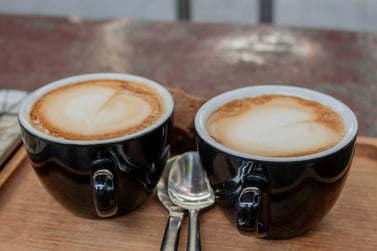 Coffee varied in each country; Belgians served it in a press, whereas Yugoslavians served Turkish coffee (very strong) in a small brass cup, together with a glass of water.
As far as road conditions went, they were good, and towns were well-posted. However we found the German autobahns were not suited for scooters, as there were joints in the surface every few yards and it was too bumpy a ride. So we followed the Bundesstrasse (secondary road), and found the scenery very enjoyable. There were many cobblestone road in Belgium. Petrol stations throughout were easy to find; no shortage there.
People were very friendly and helpful abroad, we had no difficulty if we were lost. The locals would go out of their way to help. Language was not much of a problem if you knew the odd word or two of any language. We left the rest to signs and pictures.
Many things we saw were so different from home. In Yugoslavia, we saw a man shopping on a donkey; children selling fresh figs by the side of the road; taking a ferry because the road ended, and in many places women dressed in black working in the fields.
We enjoyed a simple life for three weeks. We saw an open-air cinema at night in the market square. We took a rowboat from the campsite to the village. The movie was in German, with Yugoslavian subtitles, so we had to use our imagination to figure out the story.
The change in tempo of life did us a world of good. We arrived home physically tired, relaxed in spirit, and with many happy memories.


